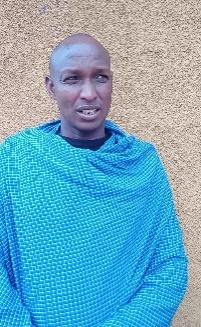
Prepared for the Future – A Leader’s Journey in Climate Change Resilience. The Story of Lukas Lazaro – Sub-Village Leader, Mairowa, Longido District
My name is Lukas Lazaro, a sub-village leader in Mairowa village, Longido District. I am married and a proud father of four children. As someone responsible not only for my family but also for guiding my community, the effects of climate change have weighed heavily on my shoulders.
For many years, I witnessed firsthand the devastating impacts of shifting weather patterns. Rainfall became erratic, droughts extended for longer periods, and our harvests continued to fail. It was disheartening to see families, including myself, plant with hope, only to harvest nothing. Our livestock, which we depend on, grew weaker, and household incomes became unpredictable. At times, I felt helpless and unsure of how to lead others through such uncertainty.
That began to change when the Pastoral Women’s Council (PWC) introduced climate change education and preparedness training in our area. I attended multiple training sessions and awareness forums. For the first time, I clearly understood what climate change is, what causes it, and most importantly, what we can do to adapt and respond. That knowledge changed everything.
Armed with new insights, I took it upon myself not only to apply what I had learned but also to encourage others in the community to adopt climate-resilient practices and move beyond traditional coping mechanisms. I began to shift from reactive survival to proactive planning, and that made all the difference.
This past farming season, I successfully harvested and stored 40 bags of maize for my family, along with 100 bags of maize bran to sustain my livestock. Having these supplies in my store gives me great peace of mind. I know that my children will have food, and that I can sell part of the surplus to generate income when the need arises. Planning has given me stability.
In addition to farming, I have diversified my income by venturing into the livestock trade. I now purchase cattle and sheep from surrounding areas and sell them at larger markets. This new business has strengthened my income base and reduced my dependence on food crop farming alone, especially critical in the face of continued climate variability.
Today, I recognize that climate change is still with us, but the difference is that I am no longer unprepared. I plan, I save, I invest. I no longer wait for disasters to strike-I take action before they do. My experience has taught me that with the right knowledge, tools, and community support, resilience is possible.
I am proud of how far I have come, and I hope that by sharing my journey, I can inspire others in similar situations to take charge of their future. Climate resilience starts with awareness, adaptation, and leadership, and I’m committed to continuing that path for my family, my livestock, and my community.