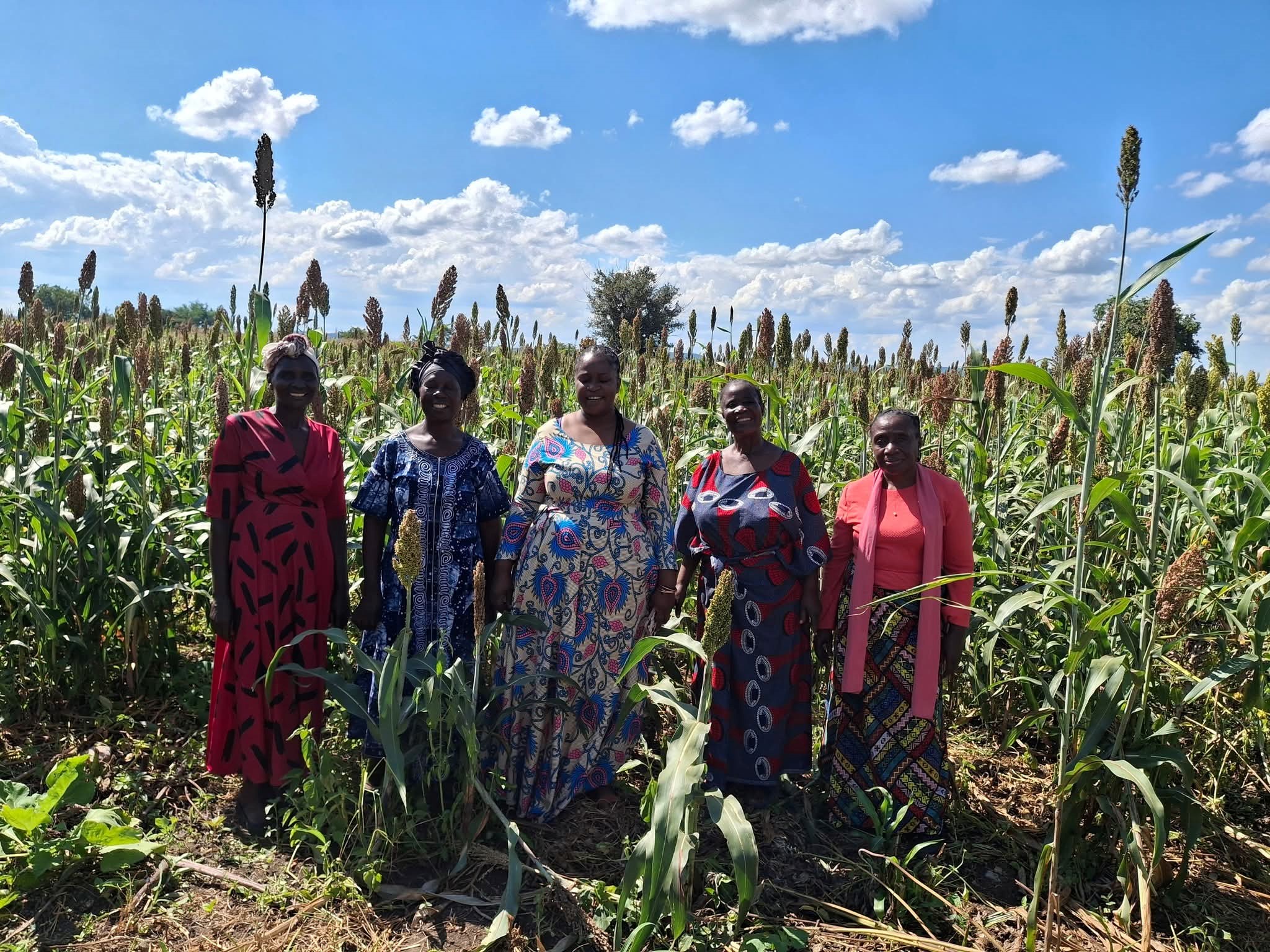
For women like Annie Mutale of Shibuyunji and Evans Chiyabuka from the Nangoma catchment area, farming is not just a livelihood but the bedrock of their families’ survival, children’s education, and community well-being. While many smallholder fields struggled under harsh conditions in Mumbwa, Annie and Evans’ farms remained productive and green. By demonstrating women’s capacity for innovation amid climate pressures, they are reshaping perceptions of women’s roles in agriculture and community leadership.
Both women have been active members of the Zambia Alliance of Women (ZAW) for years, participating in various training sessions and projects such as the “Feminist Climate Justice” supported by Global Fund for Women (GFW) aimed at empowering women and building resilience through agroecological practices. By using indigenous seeds, crop diversification, water-smart techniques, and eco-friendly cooking solutions, they contribute to food security, environmental sustainability, and reduced deforestation in Mumbwa; their farms stand as living examples of agroecological practices improving livelihoods while protecting natural resources. Their methods have motivated fellow women farmers to adopt agroecological practices, conserve soil and water, diversify crops, and embrace sustainable energy alternatives.
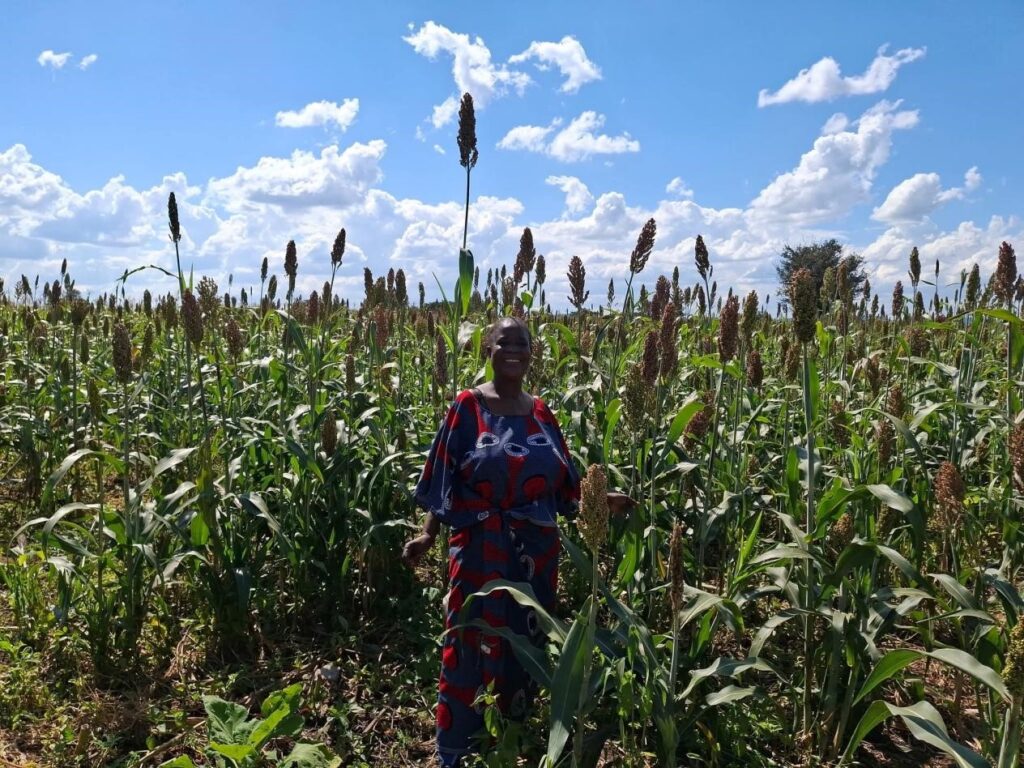
During the activity “Engagement on drought response strategies” implemented by ZAW in partnership with GFW; Annie recalled the anxiety caused by repeated maize failures, questioning how her children would eat without reliable rains. Supported by ZAW’s training, she began practicing agroecological farming, intercropping maize with legumes and groundnuts, enriching her soil with organic compost, and choosing indigenous drought-tolerant seeds. Transitioning from traditional charcoal to cleaner briquettes for cooking also helped reduce smoke exposure and protect local forests. Today, Annie’s thriving fields provide consistent food and surplus produce for market sale, generating vital income.
Similarly, Evans confronted declining soil fertility and erratic rainfall with resilience. She applied agroecological strategies learned through ZAW trainings such as mulching, water harvesting, crop rotation, planting drought-tolerant crops, and indigenous seed selection, while also switching to briquettes for cleaner cooking. “Even when the rains are scarce, I see hope growing in my garden,” she says. Her reliable yields ensure household food security and extra produce for sale. Beyond her success, Evans mentors’ other women in sustainable farming, inspiring resilience across her community.
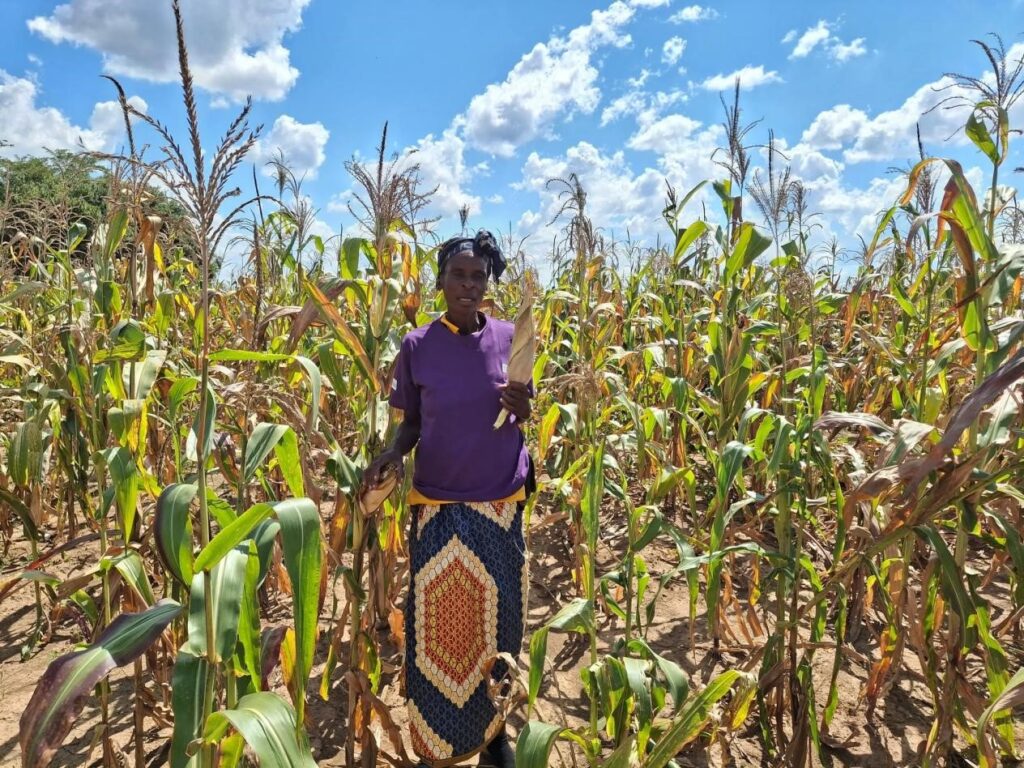
The success of Annie, Evans, and other women in Mumbwa illustrates the potential for scaling ZAW’s agroecology initiatives across Zambia. When women are equipped with knowledge, tools, and collective support, they can lead transformative agricultural change, strengthen community resilience, and inspire future farmers. Replicating these programs in other districts can empower more women, enhance food security, reduce environmental harm, and ensure adaptation strategies reach the most vulnerable.
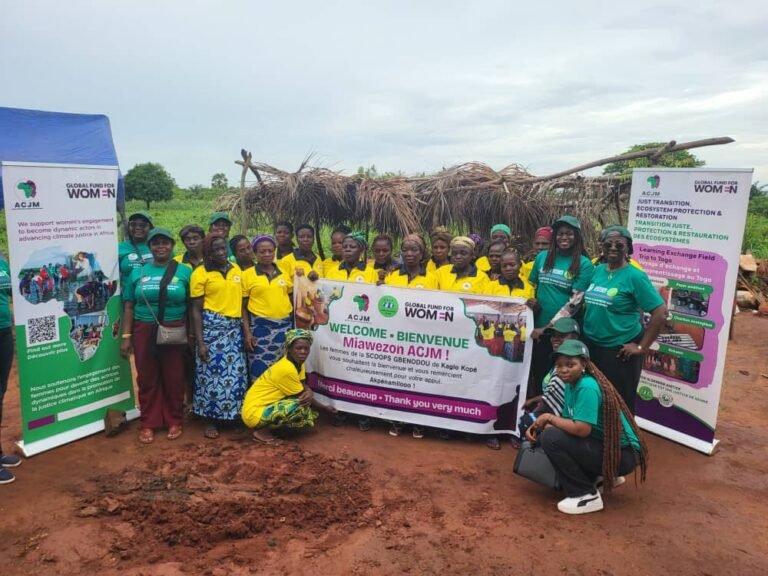
As a member of the Africa Climate Justice Movement (ACJM), ZAW receives support from the Global Fund for Women to implement its activities to support women’s engagement to become dynamic actors in advancing climate justice in Africa.