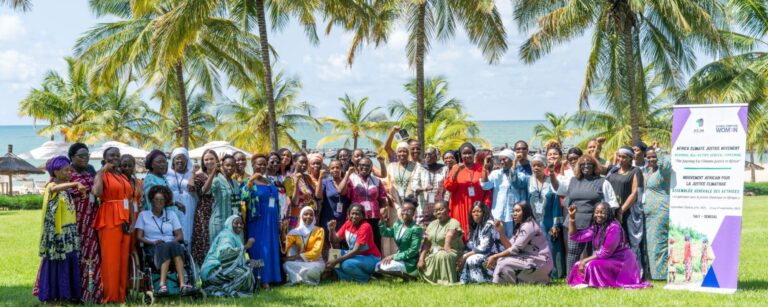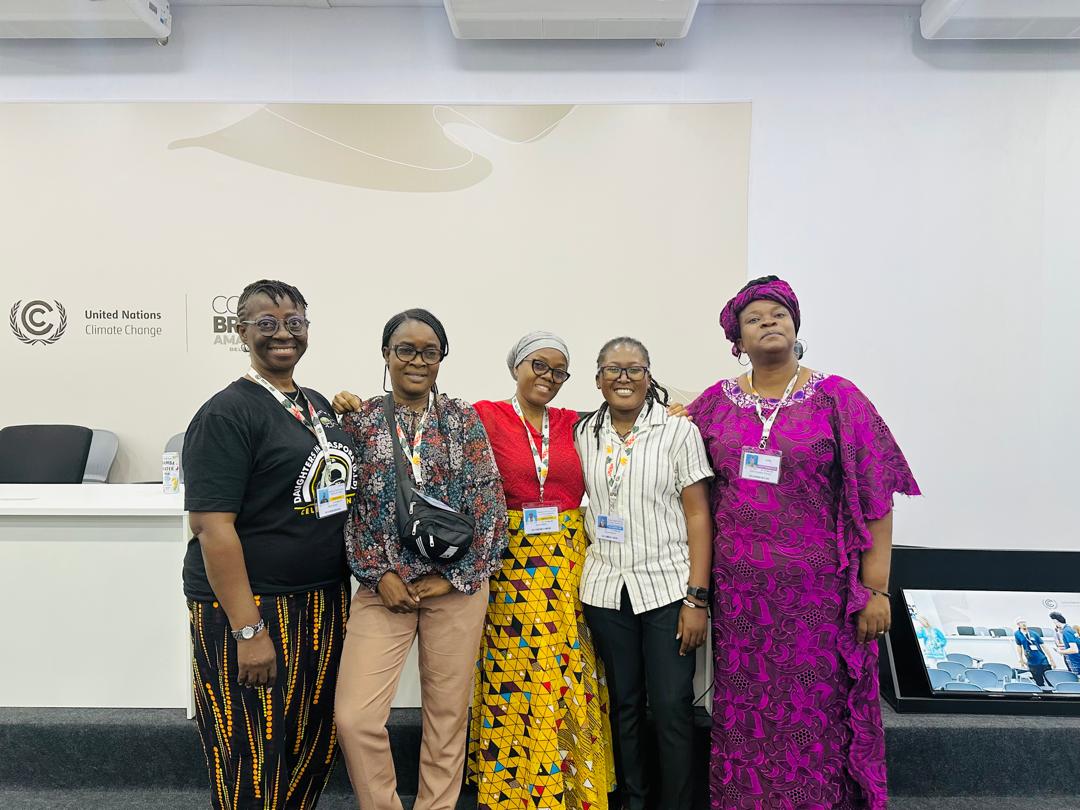
COP30 in Belém reminded the world that Africa’s climate crisis is not simply an environmental issue—it is a justice issue. It is about land, rights, power, and the lived realities of communities who have contributed least to global emissions but face the harshest impacts of drought, floods, displacement, and resource conflict. Women Action Towards Economic Development (WATED) as an actor for Africa Climate Justice Movement (ACJM), emphasized that real climate solutions must be shaped by those on the frontlines: women, Indigenous Peoples, youth, and rural communities whose knowledge and leadership have sustained ecosystems long before climate policy entered global debate.
One of the clearest messages that emerged from COP30 was the need for gender justice to stand at the heart of climate action. The continued relevance of the UNFCCC Gender Action Plan highlighted what African feminists have long argued—that women are central to land stewardship, food security, water protection, and community resilience. Yet they remain underrepresented in decision-making spaces and overlooked in climate finance. At COP30, we amplified calls for climate financing that reaches women-led initiatives, protects women environmental defenders, and ensures that adaptation strategies reflect the daily realities of girls and frontline communities.
Discussions with Indigenous leaders from the Amazon further illuminated a shared struggle. Their reflections on land grabs, extractive pressures, and the erosion of traditional knowledge mirrored the experiences of many African communities. These exchanges strengthened our conviction that a truly just transition must address historical injustices and restore land and resource rights to local people. Africa cannot build climate resilience while communities continue to lose land to mining, agribusiness, and large-scale development projects that ignore their rights and wisdom.
Despite commitments made, COP30 made it undeniable that global climate finance is still failing the Global South. The funds intended to support adaptation and resilience rarely reach grassroots organizations the very groups implementing real solutions on the ground. African delegates pushed strongly for direct access mechanisms, transparent financing, and gender-responsive budgeting. We made it clear that climate finance must flow to communities, not remain stuck in bureaucratic pipelines or concentrated among international intermediaries.
Perhaps the most inspiring aspect of COP30 was the deep sense of solidarity between actors across continents. This included African, Amazonian, and other Global South movements. Through shared stories, collective reflection, and strategy-building, we affirmed that climate justice is a global struggle against extractivism, inequality, and systems that place profit over people. Across continents, our movements are connected by a commitment to care, resistance, and the defence of land and life. As we return from COP30, we do so with renewed determination. For WATED the path forward is clear: amplify grassroots and feminist leadership, defend ecological and land rights, challenge harmful development models, and advocate for climate finance that serves communities rather than institutions. COP30 reinforced that Africa’s climate future will not be determined solely by negotiations in conference rooms—it will be shaped by the organising power, creativity, and resilience of its people. The work continues, and we are ready.
By WATED, as part of the Africa Climate Justice Movement (ACJM)