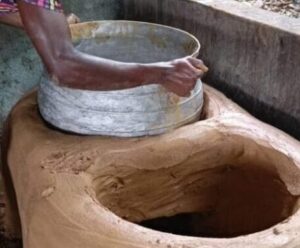
The Réseau des Femmes Braves (REFEB) implemented an awareness-raising and capacity-building initiative on the use of improved cookstoves as a gender-responsive climate adaptation solution in Côte d’Ivoire. On January 11, 2025, in the village of N’Zikro, the project directly targeted women from the GASUDCO association, who play a central role in cassava processing—an activity highly dependent on energy access. In addition, 30 women community leaders from Babdougou, Koffikro, N’Zikro, Yapokro, Tiefidougou, and Diatokro participated in the training, strengthening peer-to-peer knowledge transfer at the local level.
Women in rural Côte d’Ivoire are disproportionately affected by climate change due to their reliance on natural resources for household and income-generating activities. Firewood remains the primary source of energy in rural areas, used by nearly 90% of the population. This dependence increases women’s workload, exposes them to health risks from indoor air pollution, and accelerates deforestation, undermining ecosystem resilience and local adaptation capacities.
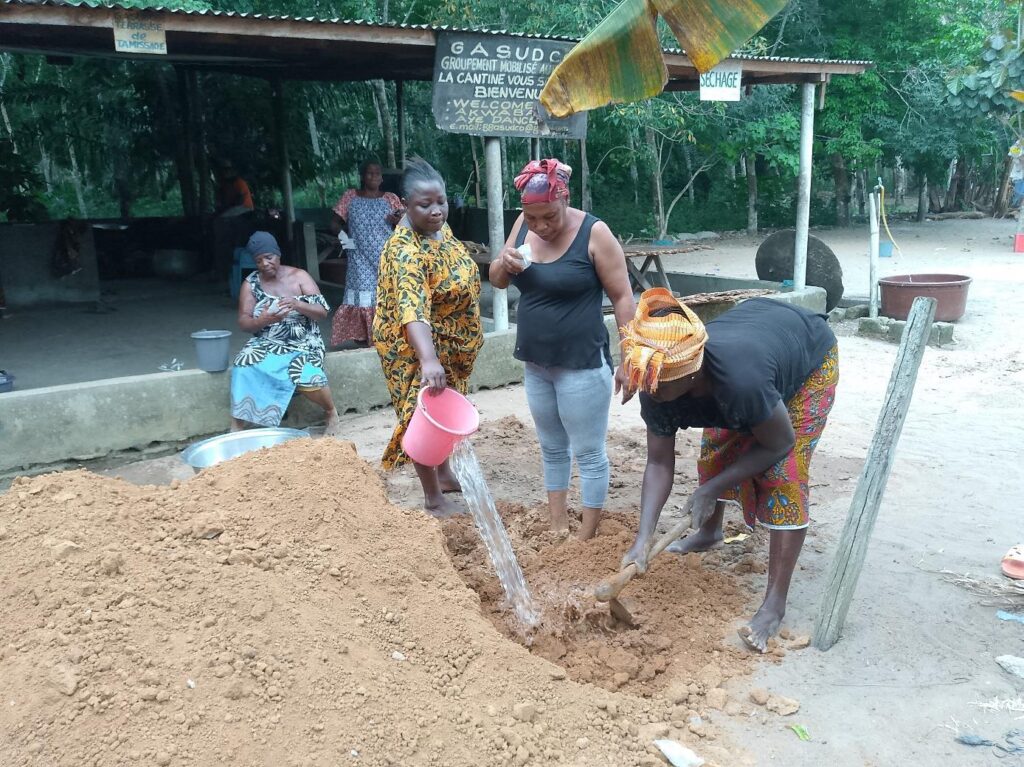
By promoting improved cookstoves, REFEB positions women not only as beneficiaries but as key actors of climate adaptation and environmental stewardship. Improved cookstoves significantly reduce firewood consumption, greenhouse gas emissions, and pressure on forest resources, while saving time and energy for women. These gains enhance household resilience, support sustainable livelihoods, and contribute to climate adaptation at the community level.
The initiative is embedded in the specific context of the Aboisso region, where industrial plantations coexist with vulnerable rural communities largely dependent on agriculture and agro-processing. In this setting, empowering women with climate-smart energy solutions contributes to reducing environmental degradation while strengthening social and economic resilience in the face of climate change.
As a member of the Africa Climate Justice Movement (ACJM), REFEB receives support from the Global Fund for Women to implement its activities to support women’s engagement to become dynamic actors in advancing climate justice in Africa.