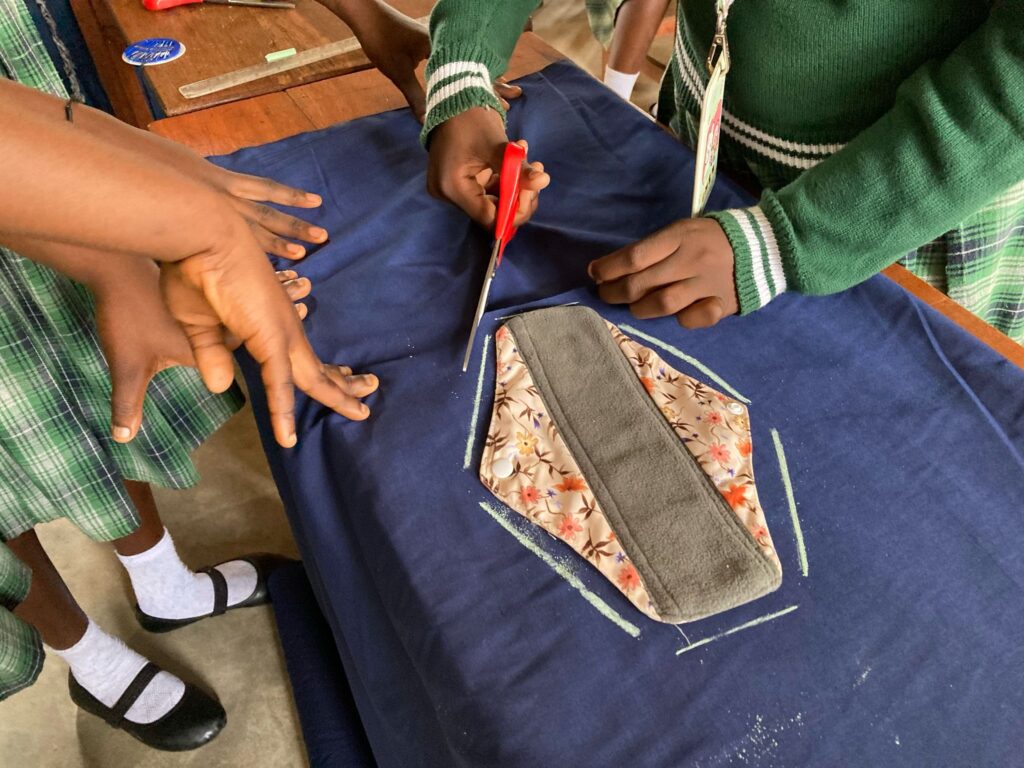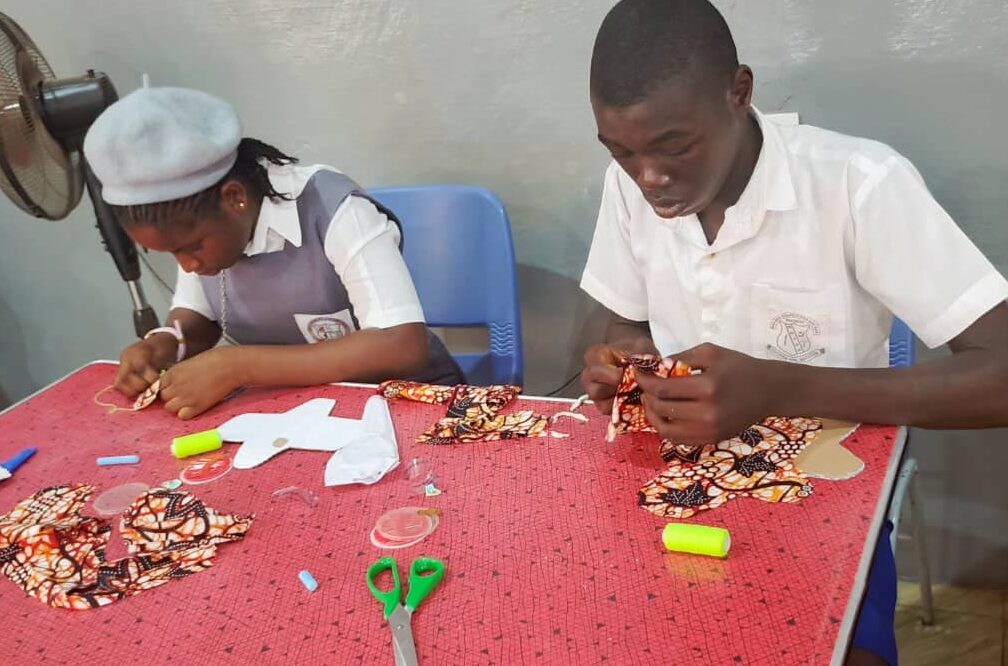
In the Eastern Kenema remote region, where girls miss school due to lack of menstrual hygiene products, Media Matters’ project impacted 50 girls in reusable pad production. They created “pad banks” at two rural schools, where students could access clean pad and make them after their period. The initiative empowered young girls with sewing and small-scale entrepreneurship skills, with some now selling pads in local markets.
The project had a larger impact on climate angle because it:
- Tackled both gender injustice and environmental waste by offering a locally made, sustainable alternative to imported plastic-based pads.
- Reduced the carbon footprint of imported disposable products and empowered local solutions, highlighting indigenous knowledge and resilience.
- Combined menstrual hygiene with environmental stewardship, giving girls both voice and visibility in climate discussions.
- Addressed the intersectionality of poverty, gender, and climate vulnerability, using both traditional and modern media to amplify girls’ voices.
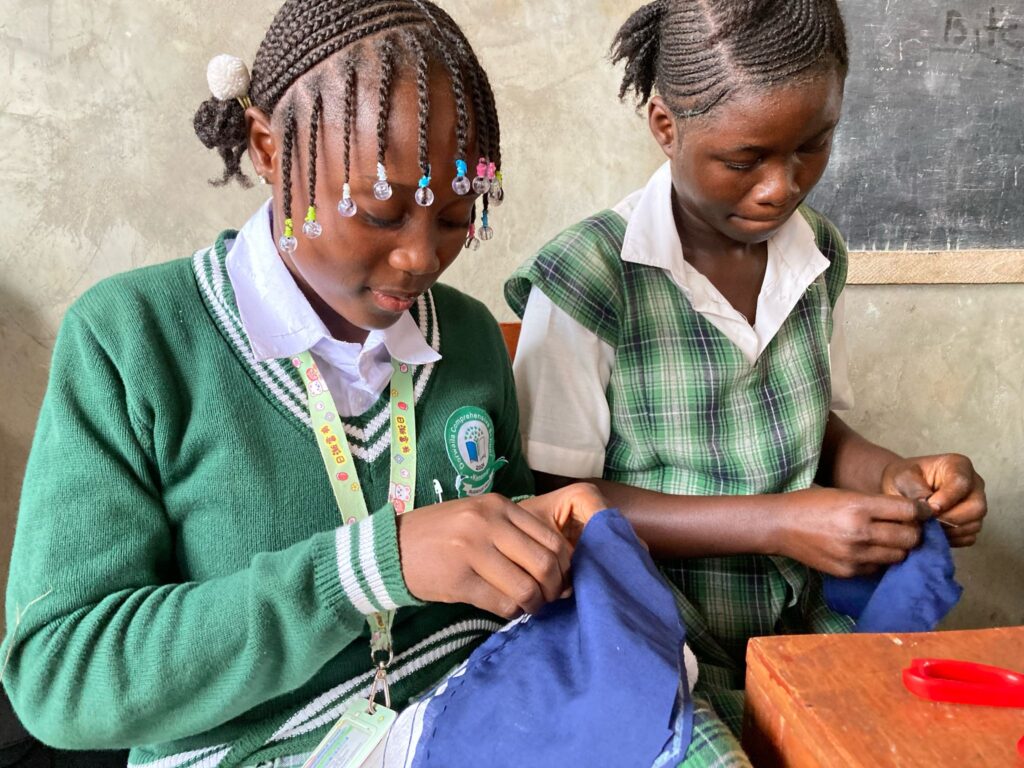
In Bombali, 50 secondary school girls were trained in sewing reusable menstrual pads using local, biodegradable materials like cotton cloth and banana fibers. The program not only reduced school absenteeism due to menstruation but also addressed plastic pollution caused by disposable pads. The girls later trained 50 more peers across five schools, creating a multiplier effect. Community sensitization led to school authorities officially adopting the pads in school health programs.
This youth-led initiative provided eco-skills training to 50 adolescent girls, integrating reusable pad-making with climate change education, tree planting, and composting. The girls became “eco-ambassadors” in their schools, advocating for climate action and menstrual dignity. Their storytelling and radio interviews sparked county-wide awareness.
As part of a larger initiative on girls’ rights and climate awareness, the program “Pads4Climate” – Waterloo District, trained schoolgirls and out-of-school adolescent girls to make washable sanitary pads using repurposed cloth and natural dyes. The storytelling component encouraged girls to document and broadcast their climate experiences through solar-powered radios. This project connected menstrual health, education, and climate narratives.
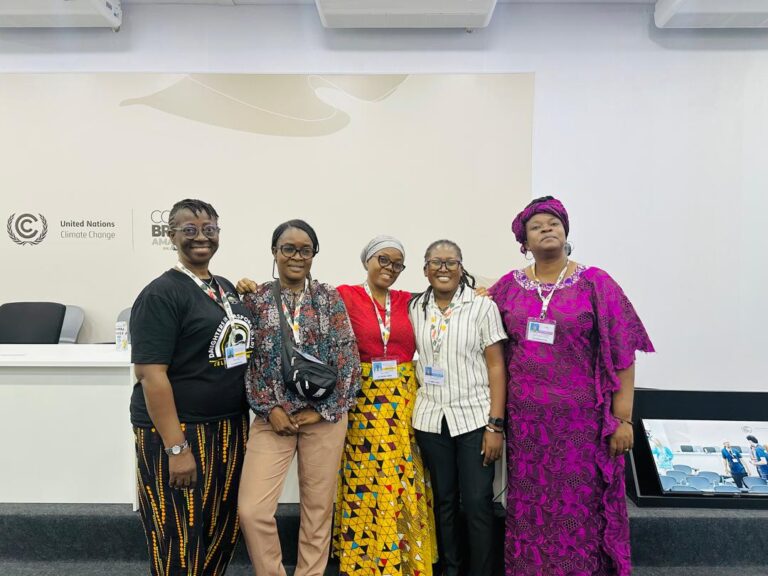
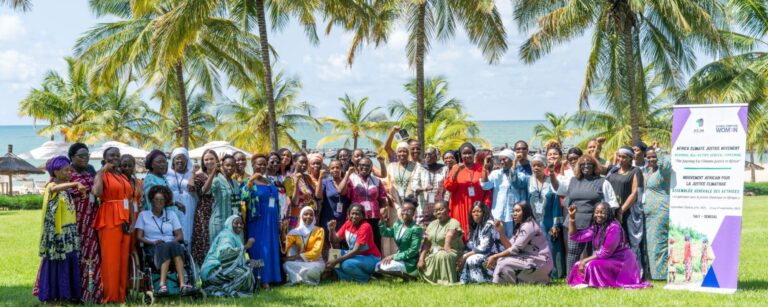
As a member of the Africa Climate Justice Movement (ACJM), Media Matters receives support from the Global Fund for Women to implement its activities to support women’s engagement to become dynamic actors in advancing climate justice in Africa.