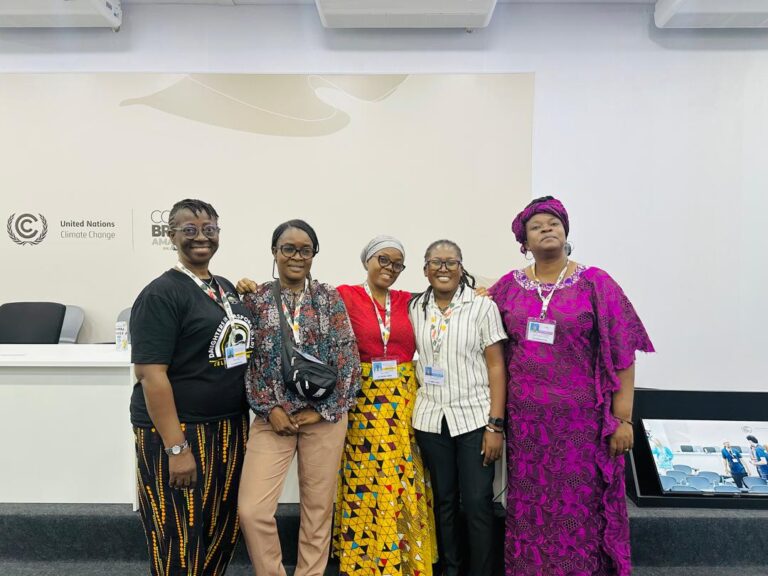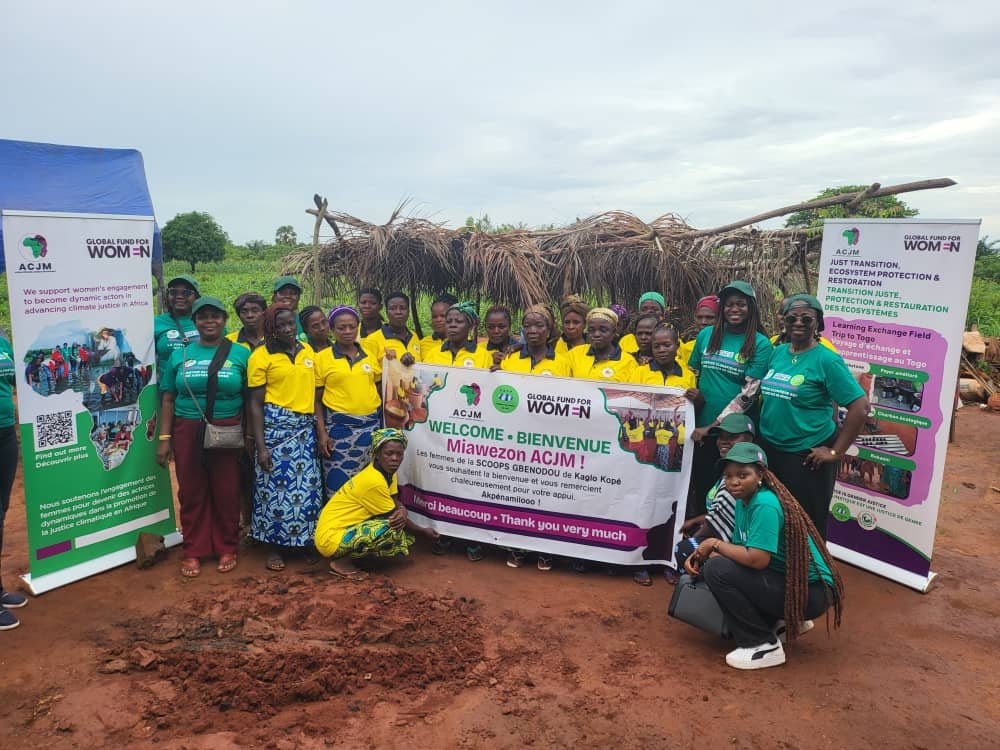
From May 24 to 31, 2026, Soutien Aux Femmes Démunies (SAFD) and Association Femme Debout-Togo (AFD) hosted women activists from the Africa Climate Justice Movement (ACJM) from Nigeria, Liberia, Côte d’Ivoire, and Burkina Faso for a learning and experience-sharing visit in Togo.
Strengthening Capacities Through Hands-On Learning
The purpose of the mission was to strengthen participants’ capacities through hands-on learning of ACJM-supported initiatives implemented by SAFD and AFD, with the aim of facilitating their adaptation and replication in the participants’ respective countries.
Learning Practical Agroecological Solutions
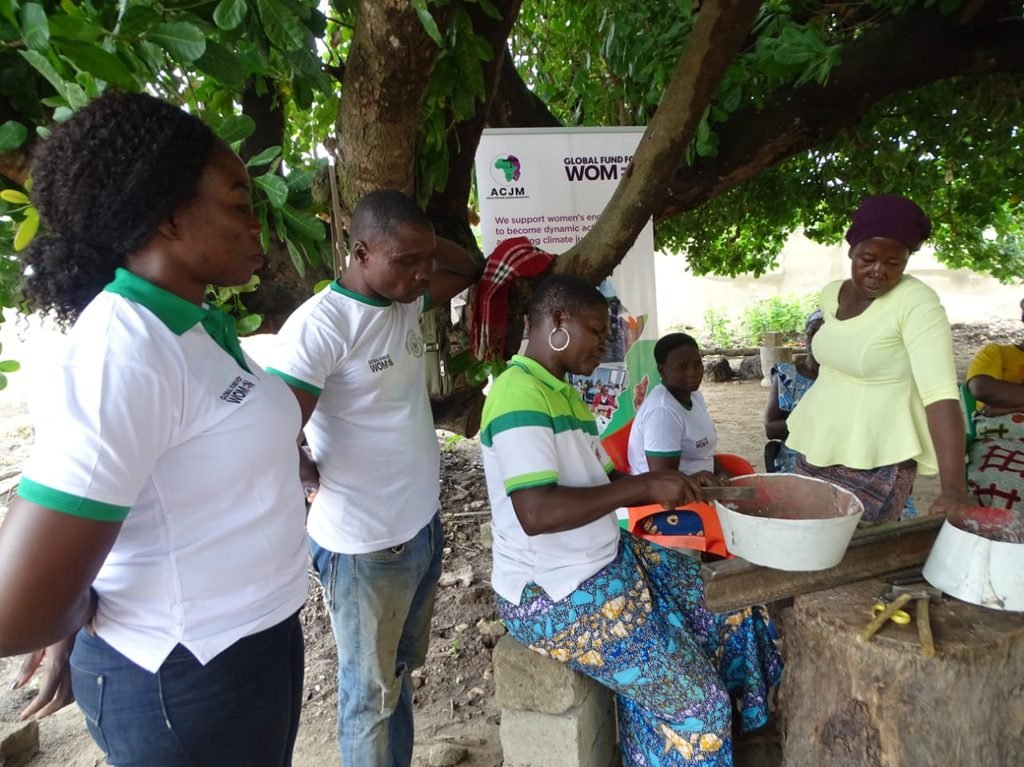
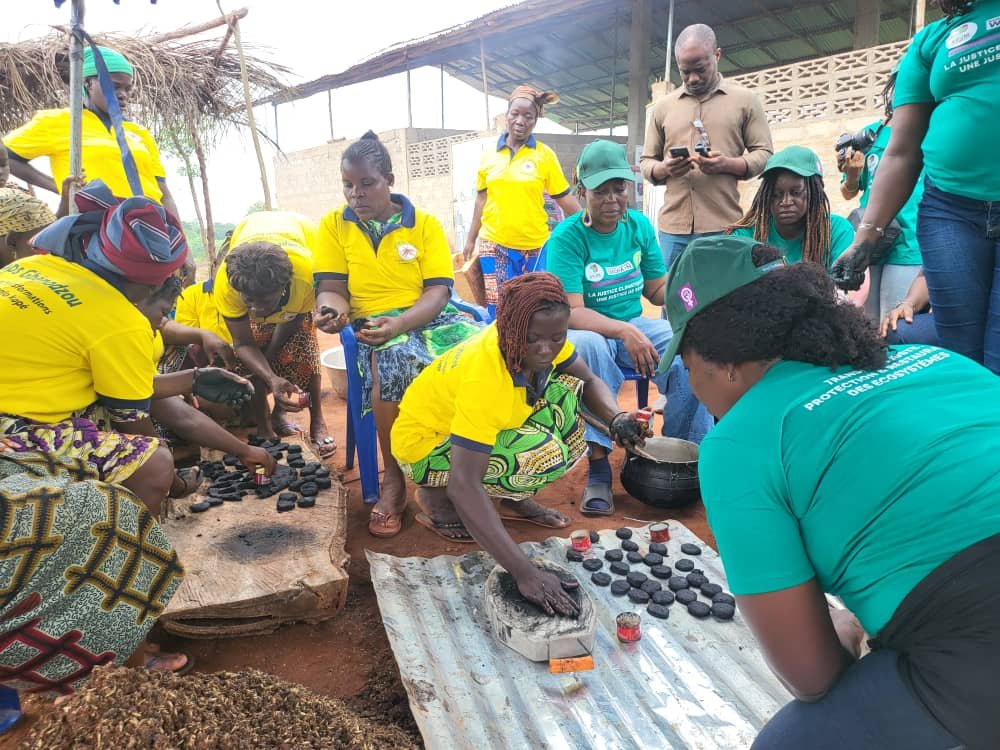
During their stay, the activists received practical training on the production of eco-friendly charcoal briquettes, Bokashi organic fertilizer, and improved cookstoves, as well as agroecological practices that contribute to ecosystem restoration.
The training sessions were facilitated with the support of the women of Aouda in Sotouboua and members of the GBENODOU Cooperative in Kaglokpé, who shared their experiences and the results achieved through ACJM-funded projects.
Discovering an Integrated Model of Sustainable Natural Resource Management
The delegation also visited the ecological farm of CADO in Agou.
This field visit enabled participants to learn about an integrated model of sustainable natural resource management, including the restoration of a 7-hectare forest and the operation of a biodigester powered by animal waste from the farm.
The biogas produced is used for cassava processing, while the biodigestate is utilized as organic fertilizer for agricultural production.
Identifying Solutions for Adaptation and Replication
The visit enabled participants to strengthen their technical skills, gain a deeper understanding of the impacts of ACJM-funded initiatives on local communities, and identify practical solutions that can be adapted and replicated in their own national contexts.
Advancing a Women-Led Just Transition
Through this initiative, ACJM, SAFD, and AFD reaffirm their commitment to promoting a just transition led by women and grounded in locally driven, sustainable, and environmentally friendly solutions.